Why Is Unused Annual Leave More Than Just an HR Issue?
Under the Korean Labor Standards Act, employees are generally entitled to 15 days of paid annual leave per year.
If employees fail to use their annual leave within the prescribed period, the employer may be required to compensate them in cash for the unused portion.
For this reason, many companies view annual leave primarily as an HR or labor law issue.
However, from the perspective of a foreign company’s Finance Team, annual leave can significantly affect several areas, including:
- Payroll
- Tax reporting
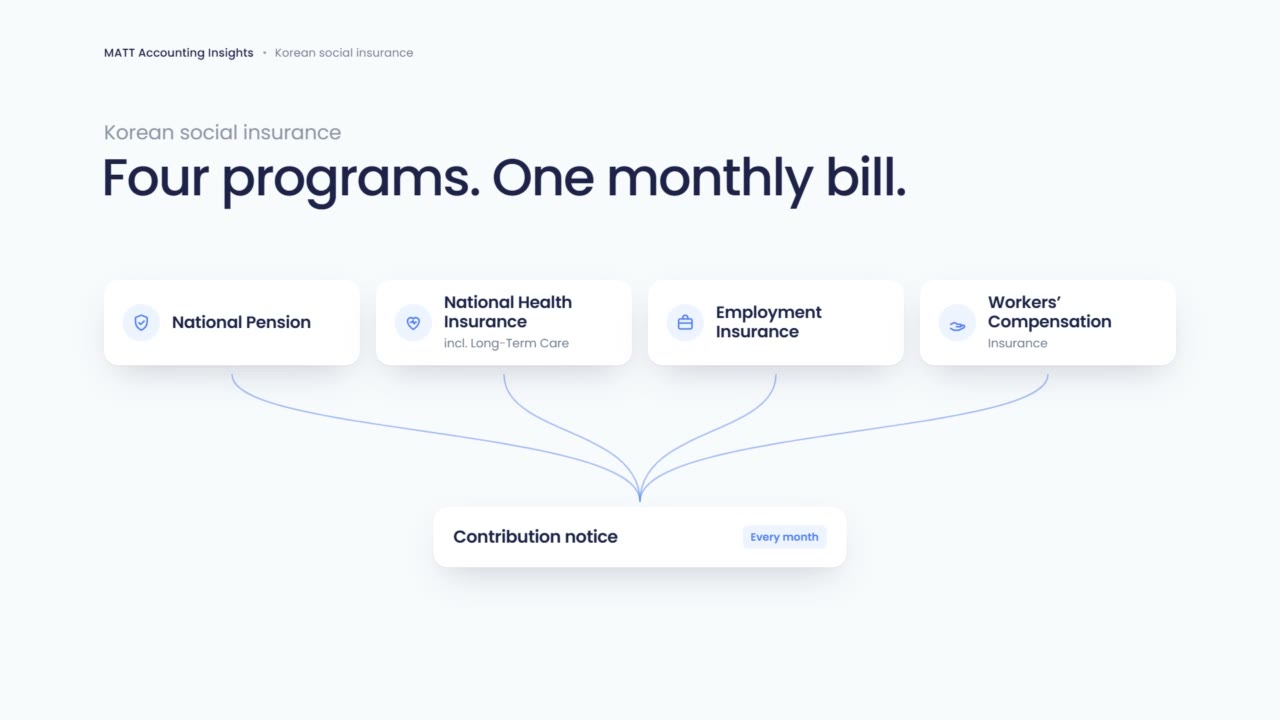
- Social insurance contributions
- Retirement pension plans
- Financial statements
Therefore, annual leave is not only an HR matter but also an accounting and finance issue.
1. Key Considerations When Paying Unused Annual Leave Compensation
(1) Accounting Treatment
Unused annual leave compensation is generally recorded as Salary Expense or a related employee compensation account based on the company’s accounting policy.
In practice, some companies also maintain a separate account such as Annual Leave Expense for internal reporting purposes.
(2) Tax and Social Insurance Implications
Unused annual leave compensation is generally treated as employment income.
Accordingly, the following items typically arise upon payment:
- Withholding of employment income tax
- Withholding of local income tax
- Deduction of the employee’s share of social insurance contributions
- Recognition of the employer’s share of social insurance contributions as an expense
Therefore, the payment of unused annual leave is not merely a cash payment to employees. It also has payroll tax and social insurance implications.
(3) Impact on Retirement Pension Plans
This is one of the areas often overlooked by foreign companies.
DB Plans
Unused annual leave compensation may affect the calculation of the employee’s average wage, which in turn may impact severance benefit calculations.
DC Plans
In general, unused annual leave compensation may be included in the compensation base used to determine employer contributions to the DC retirement pension plan.
However, in practice, it is important to distinguish between:
- Unused annual leave compensated because the usage period has expired; and
- Unused annual leave compensated due to an employee’s resignation or termination before taking the leave.
Companies operating a DB retirement pension plan should verify with the Payroll or HR Team why the unused annual leave compensation arose, as annual leave compensation paid solely due to termination may not be included in the base used for calculating DB retirement pension obligations.
2. Annual Leave Accruals at Year-End
The area where misunderstandings most frequently arise is accounting treatment.
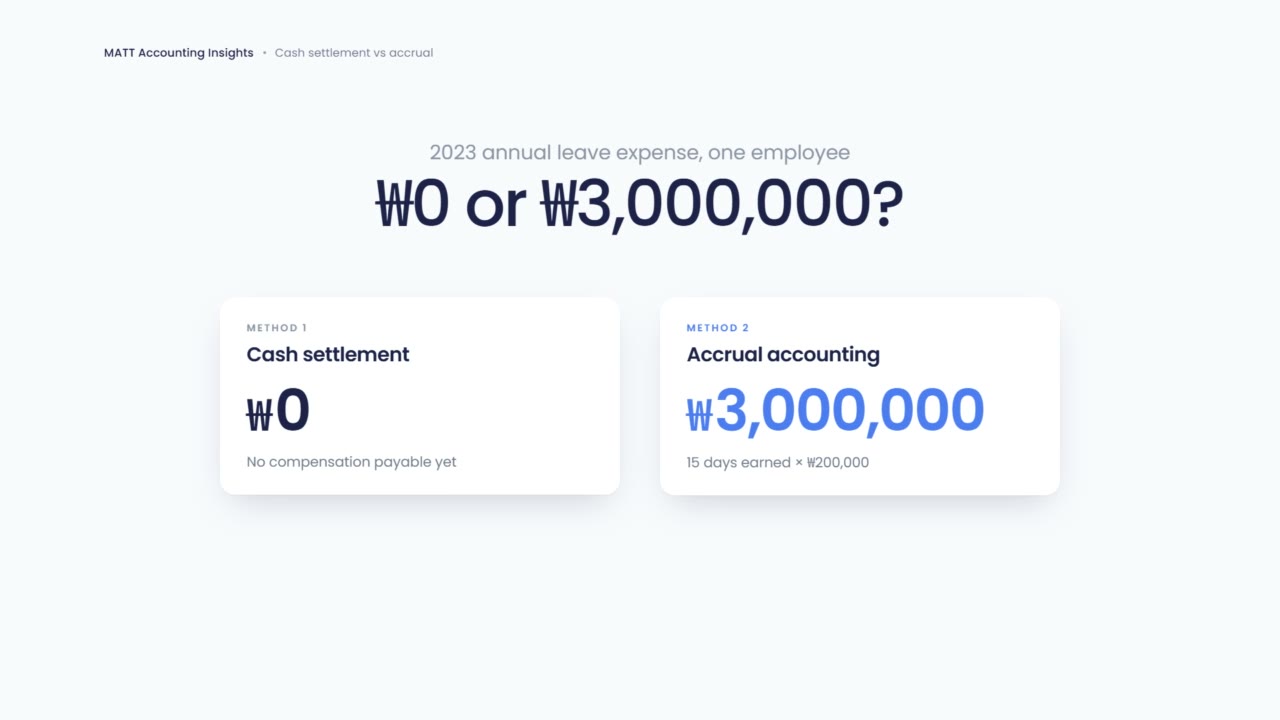
Many companies recognize a liability only for annual leave compensation that is expected to be paid.
However, from an accrual accounting perspective, a different approach may be required.
Two Concepts That Should Be Distinguished
Companies should distinguish between the following two concepts:
① Unused Annual Leave Compensation Payable
The current obligation to compensate employees for unused annual leave.
② Annual Leave Accrual
The future obligation that gradually accumulates as employees provide services during their employment period.
Many companies treat these concepts as identical, but they may be significantly different from an accounting perspective.
What Does Year-End Annual Leave Liability Typically Consist Of?
At year-end, the annual leave-related liability generally consists of two components:
1. Unused Leave Already Granted
For example, annual leave granted at the beginning of the year that remains unused at year-end.
2. Future Leave Earned Through Current-Year Service
The obligation arising from services already rendered by employees during the current year, which will result in annual leave being granted in the following year.
In other words, from an accrual accounting perspective, a company may need to consider not only currently unused annual leave but also the future leave benefits earned through services already provided by employees.
Why Is Accrual Accounting Important?
If accrual accounting is not applied, annual leave-related expenses may only be recognized when unused leave is settled in cash.
Under accrual accounting, however, the expense is recognized over the period during which employees render their services.
While the total expense recognized over the long term may ultimately be the same under both approaches, the key difference is which accounting period reflects the expense in the financial statements.
Common Issues Identified in Practice
During financial statement audits, the following issues are frequently observed:
- Failure to recognize annual leave accrual liabilities
- Confusion between annual leave compensation payable and annual leave accruals
- Inconsistent accounting policies from year to year
- Differences between HR records and accounting records
These issues may result in audit adjustments or requests for additional explanations and supporting documentation.
Key Takeaway
Annual leave is not simply a matter of leave administration.
Unused annual leave can affect:
Payroll
Tax reporting
Social insurance contributions
Retirement pension plans
Severance calculations
Financial statements
Accordingly, companies should not focus solely on annual leave compensation payable.
They should also consider whether:
“All obligations and liabilities relating to annual leave have been properly reflected in the financial statements.”
Proper management of annual leave is not only an HR compliance issue. It is also an important component of accurate financial reporting and sound accounting practices.